
University Media
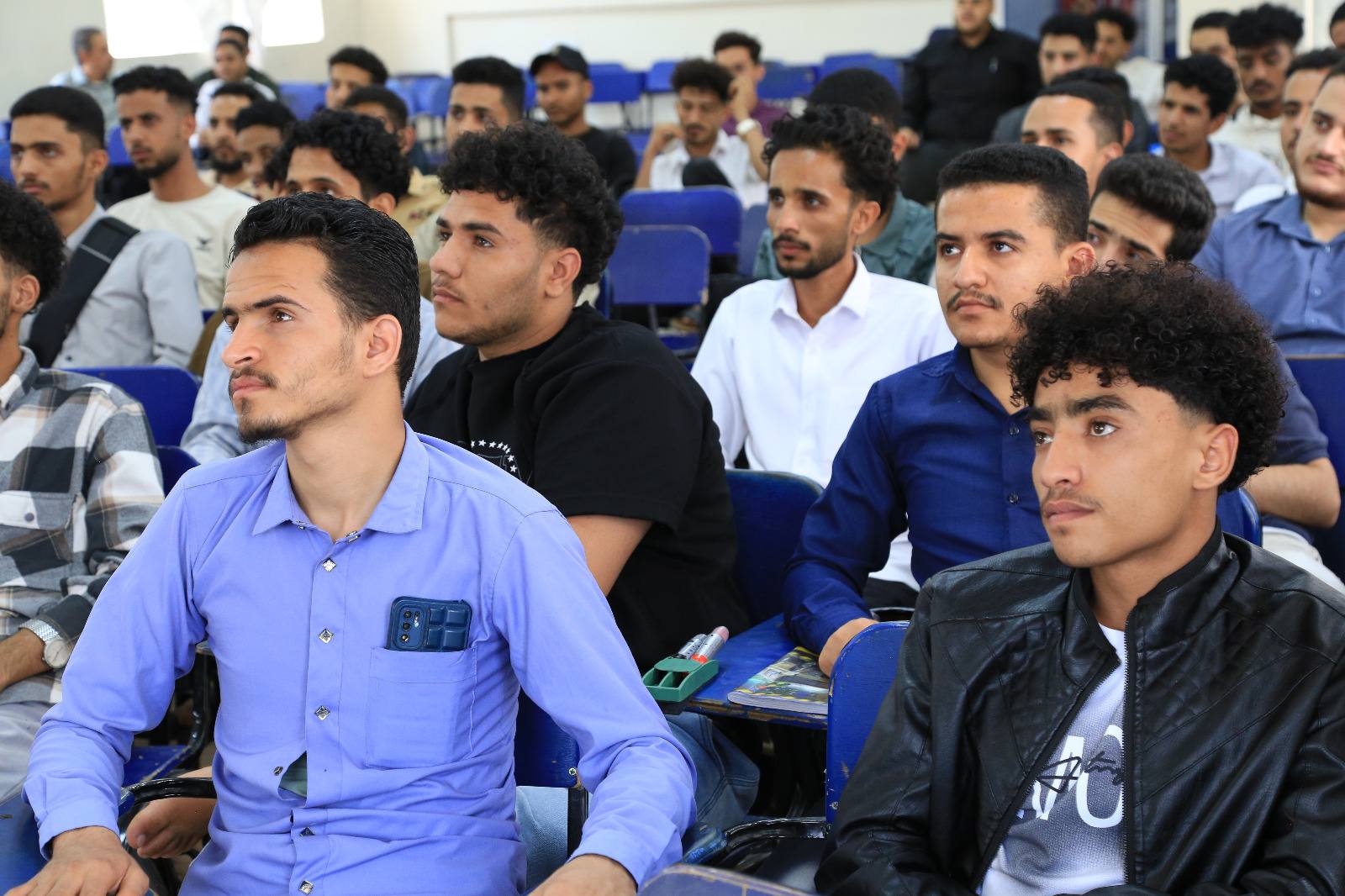
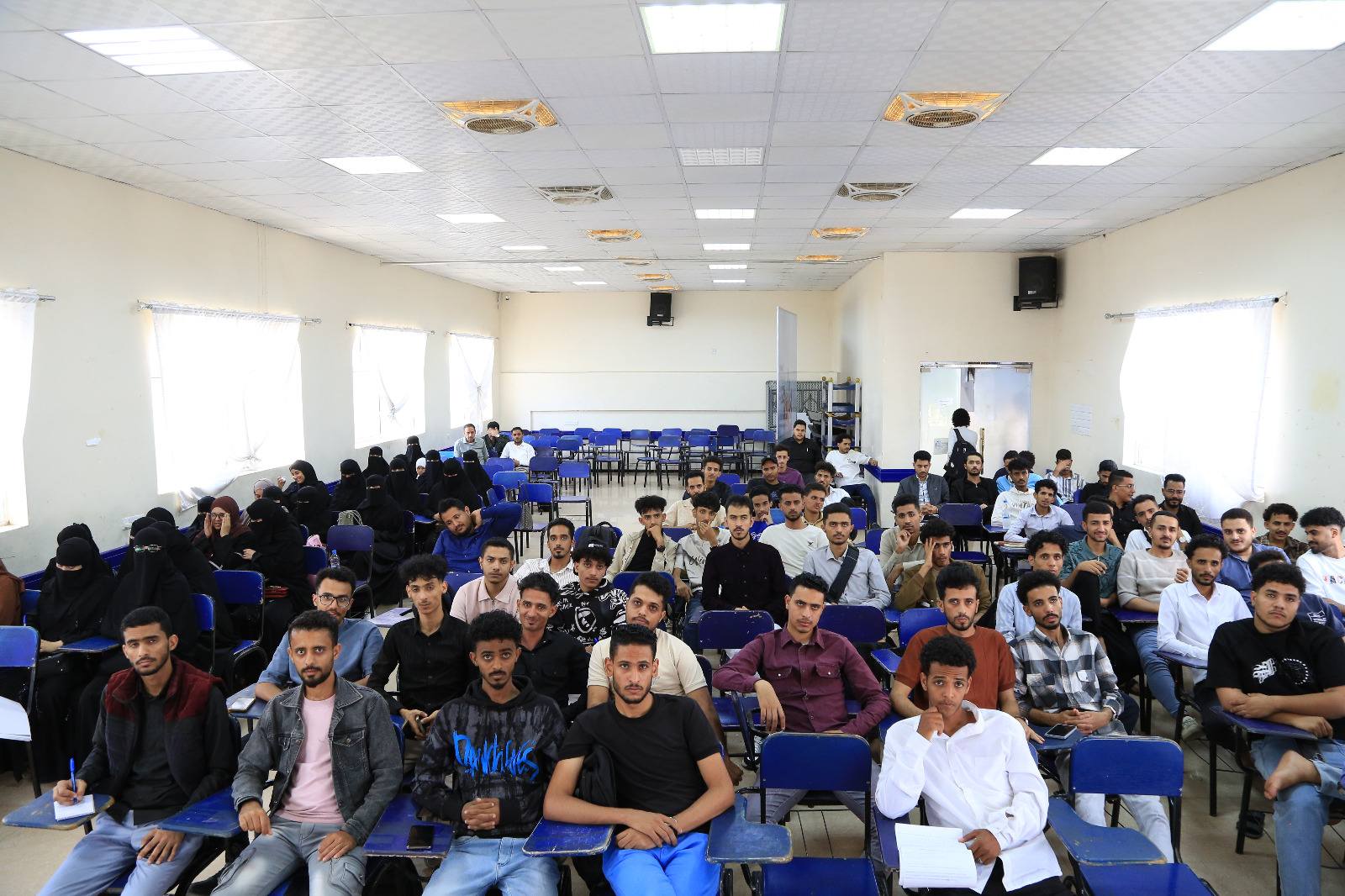
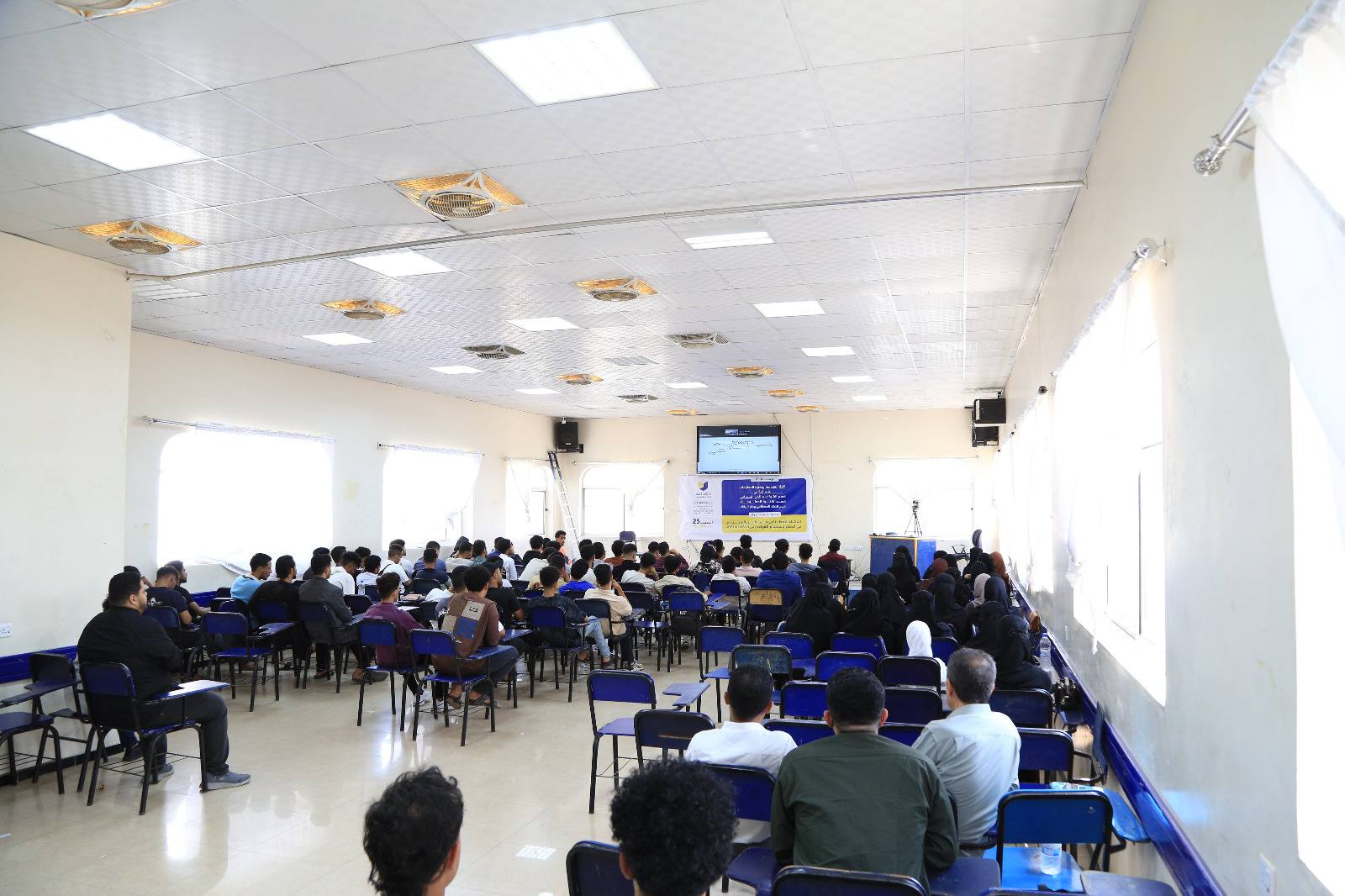
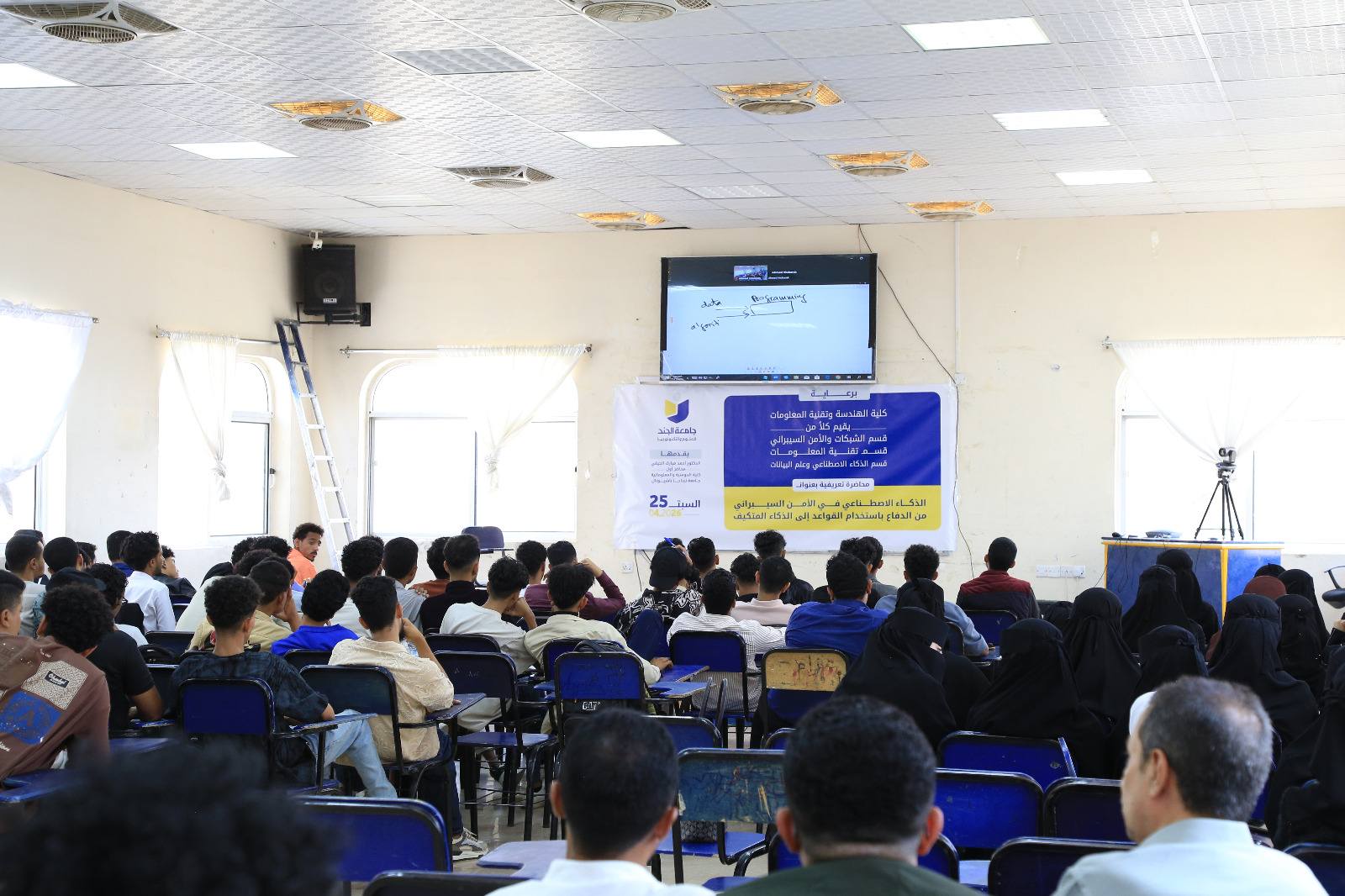
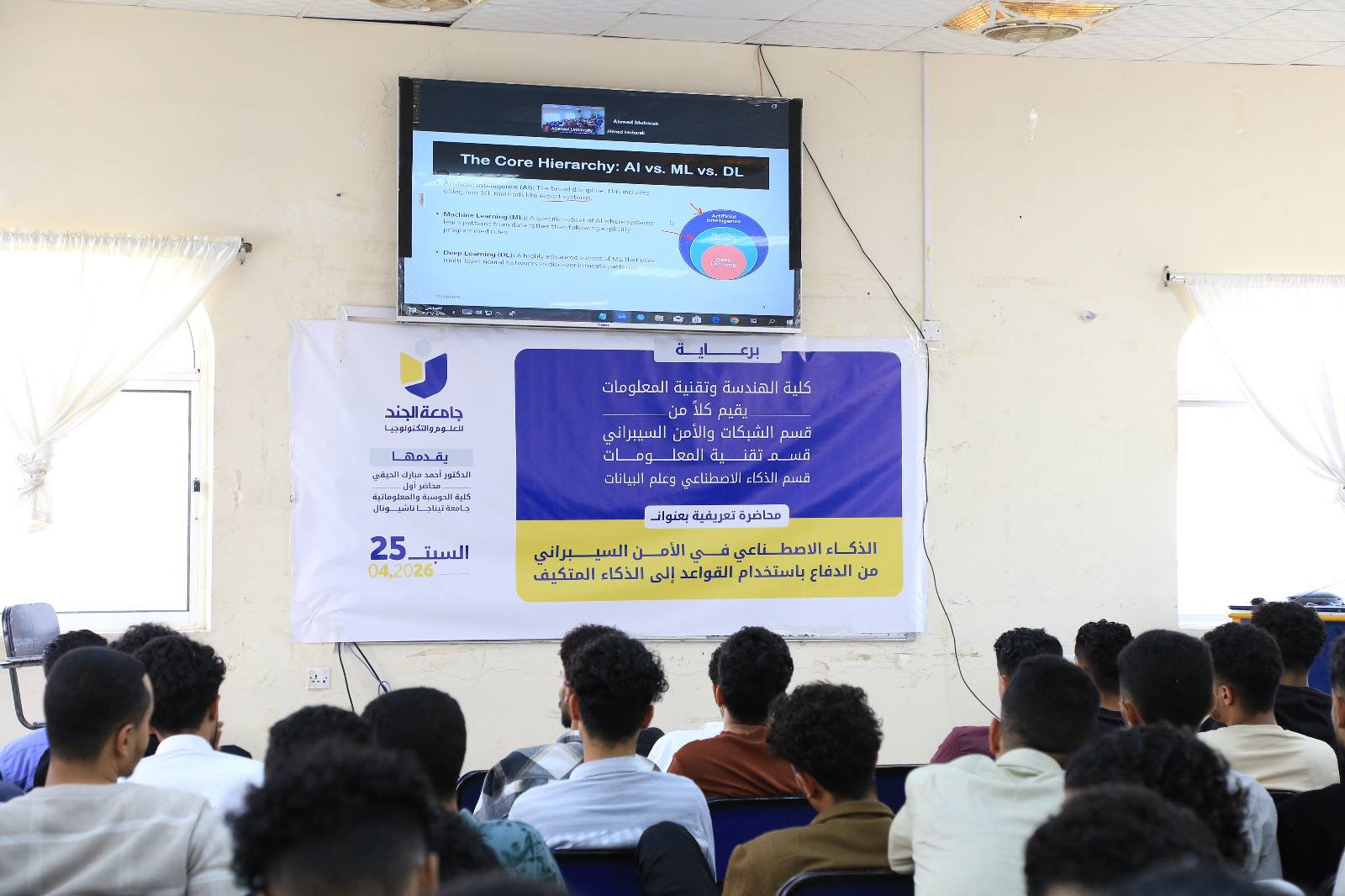
Al-Janad University for Science and Technology hosted a scientific lecture examining the role of artificial intelligence in advancing cybersecurity, as part of its ongoing efforts to enhance student knowledge and keep pace with rapid technological developments.
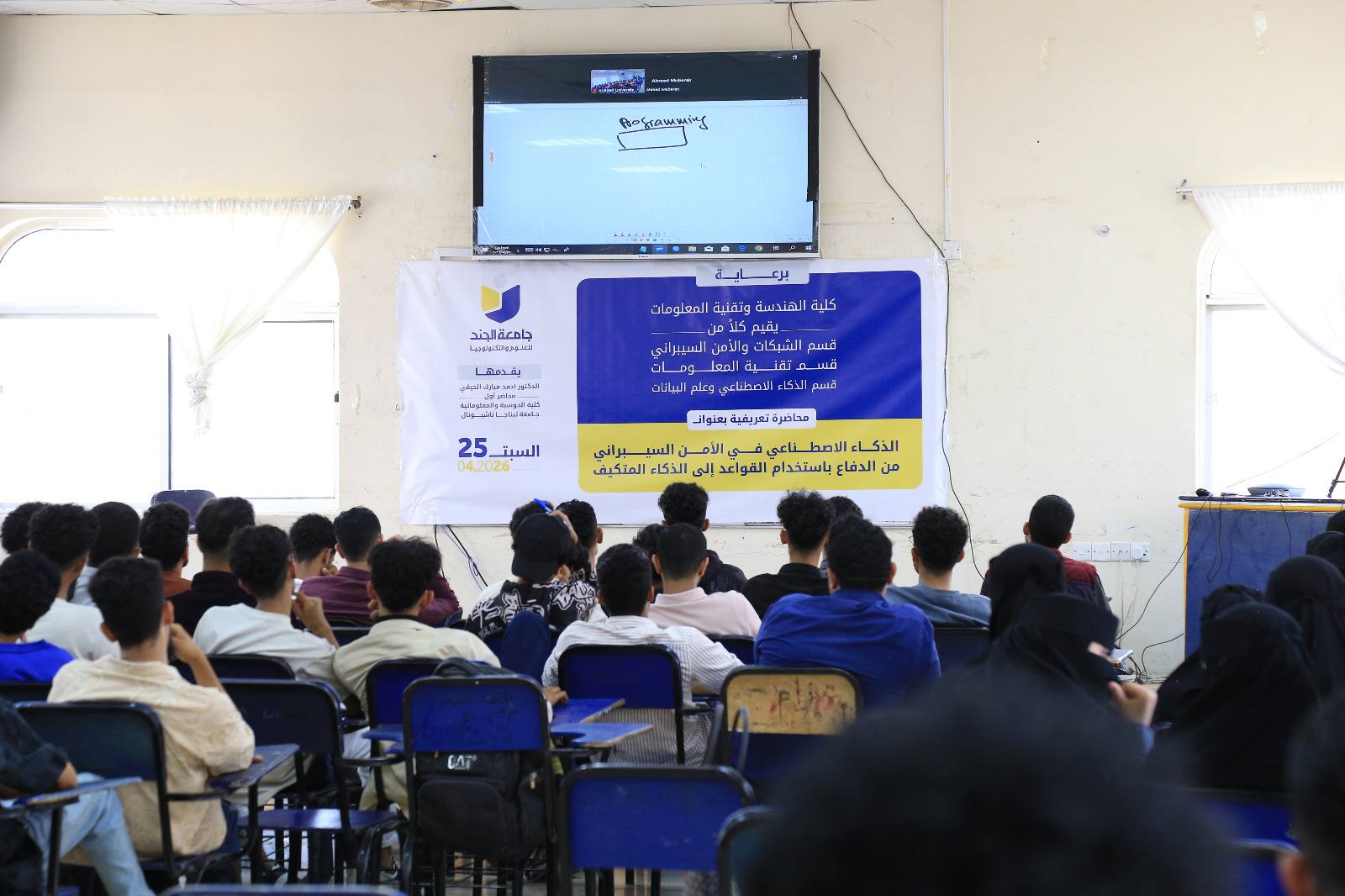
The lecture, titled “Artificial Intelligence in Cybersecurity: From Rule-Based Defense to Adaptive Intelligence,” was jointly organized by the Departments of Information Technology, Networks and Cybersecurity, and Artificial Intelligence and Data Science, under the auspices of the Faculty of Engineering and Information Technology.
Delivered by Dr. Ahmed Mubarak Al-Haiqi of the College of Computing and Informatics at Tenaga National University, the session explored the evolution of AI technologies and their application in building advanced cybersecurity systems. It also addressed challenges related to securing AI models and protecting them from attacks and misuse.
Dr. Al-Haiqi highlighted the shift from traditional rule-based defense systems to adaptive, intelligent frameworks capable of responding to evolving threats. The lecture was supported by practical simulations of attack and defence scenarios, designed to strengthen students’ applied understanding and connect theoretical concepts with real-world practice.
The event forms part of the departments’ broader strategy to develop students’ practical skills by drawing on the expertise of academics and specialists from within Yemen and abroad, thereby enhancing academic outcomes and aligning study with contemporary applications.
Al-Janad University continues to expand its focus on scientific events in technology-related fields, providing students with opportunities to engage with specialized expertise and equipping them to respond to the fast-evolving landscape of artificial intelligence and cybersecurity.
 Tuesday, 19 May, 2026
 Saturday, 16 May, 2026
 Friday, 15 May, 2026 Sunday, 26 April, 2026
 Sunday, 26 April, 2026
 Monday, 20 April, 2026
To locally lead, regionally compete in education and scientific research, and effectively contribute to community service
Copyright ©2026 Al Janad University. All Rights Reserved